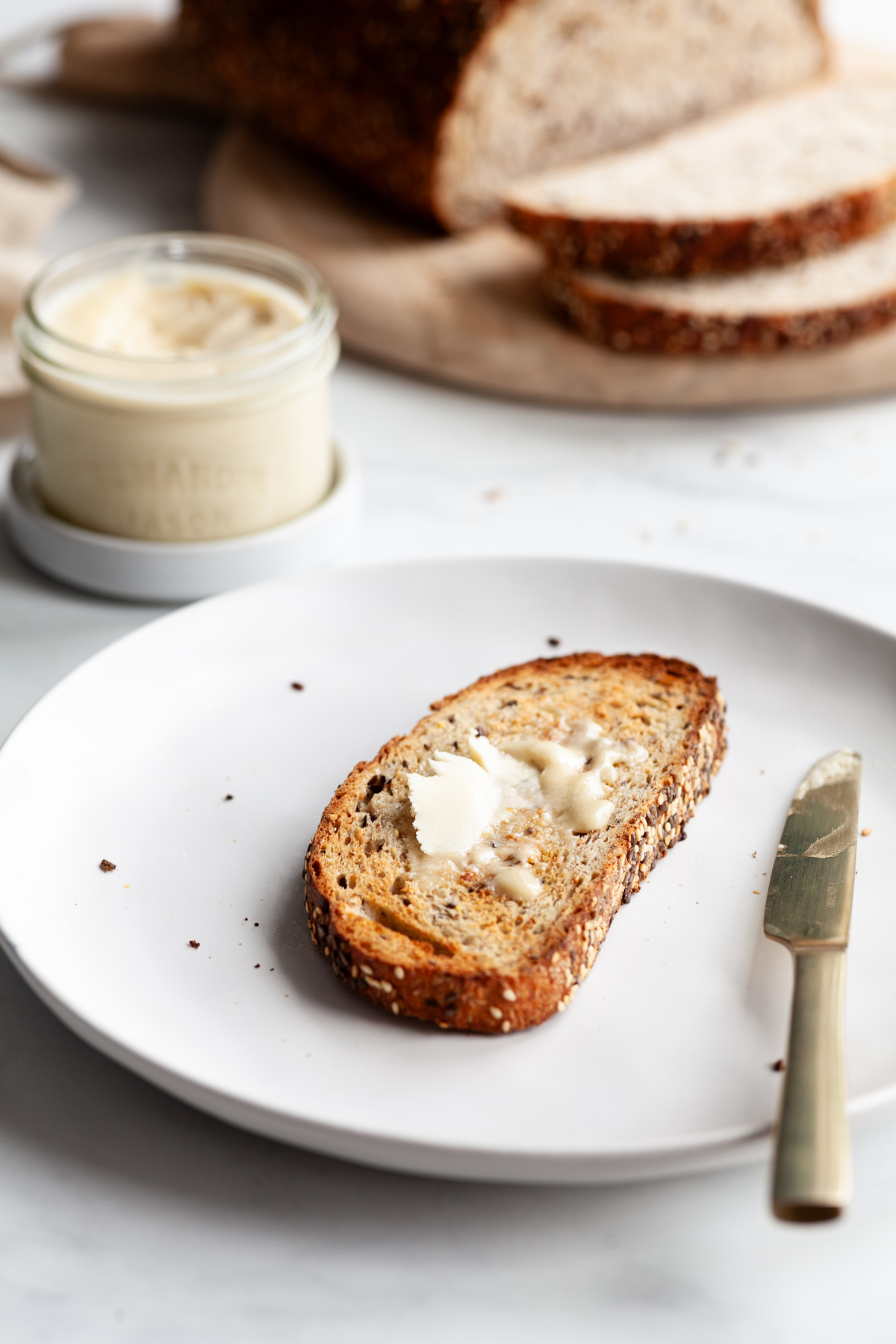
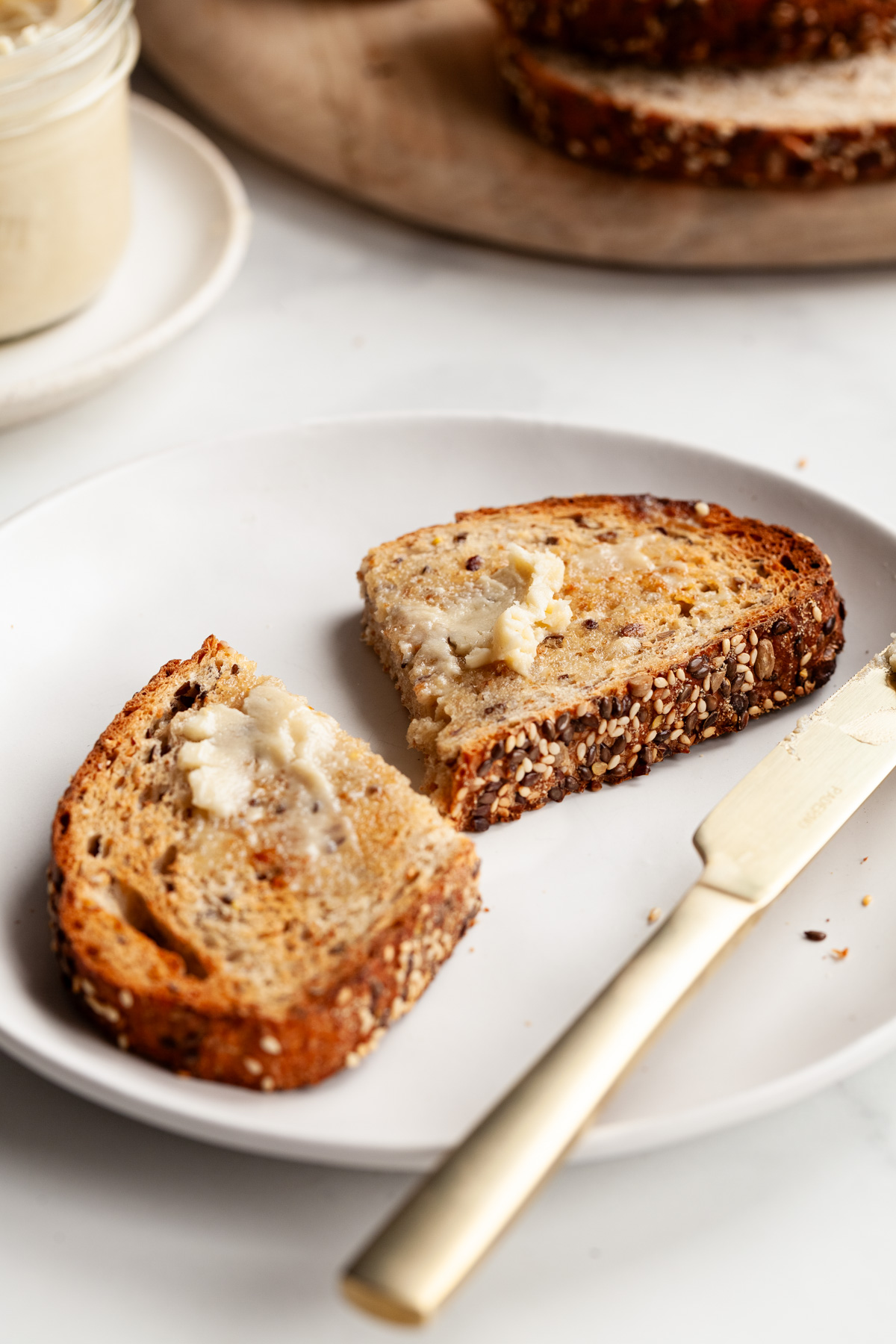
One of the original and best vegan butter recipes out there. This unbelievably easy vegan butter recipe is creamy, rich and spreadable and comes together quickly in a blender. It's ideal for toast, scones or dolloped over roasted vegetables; it melts beautifully and contains no palm oil, no soy and no dairy of any kind. Makes approximately 250ml.
This recipe was originally published in 2016 and has since been updated with new images and more information on why this recipe has been a to go to for readers over the years.
Yields 50 servings
Prep Time 5 minutes | Cook Time | Total Time 45 minutes
5 Star Reviews
"I made this butter for the first time a couple weeks ago and have been loving it ever since, especially on my toast. It’s so delicious; texture is so incredible and creamy, flavor is wonderful, and I love that it’s homemade. I have been looking for a recipe like this for a while, and I’m so happy I came across this one. Thank you so much for sharing this gem!"
-Sydney Ojeda
"Heidi, thank you so much for fulfilling one of my health goals--giving up butter. Before I discovered your recipe, I came across ones that required using a probiotic, so I wasn't sure if your recipe would do the trick, look, spread and taste like butter. But, your simple butter is fantastic! Thank you!"
-Ann Walker
Why This Recipe Works
Spreadable vegan butter is easy to make at home and yields a final product similar to dairy butter—smooth, creamy, and rich tasting—without hydrogenation, palm oil or soy products. This recipe blends together in minutes and the remaining time is hands off while it solidifies in the fridge.
Created and shared back in 2016, this recipe is one of the original (and best) for spreadable vegan butter. There are countless variations on it now, however, this one is just as good as it ever was, with lots of great reviews to it's name.
A combination of coconut and olive oil along with cashews make up the base of this recipe. The rich flavour for my recipe comes from apple cider vinegar, sea salt and nutritional yeast which mimic a fermented or cultured flavour, similar to those beloved European butters.
Unlike other recipes that use a cashew base, there is no soaking time involved for this recipe. I developed it to exclude this step because (1) soaking introduces additional water to the heavily fat based mixture and (2) when water meets fat they separate and (3) it adds unnecessary time to the recipe. The lower liquid/water content in my recipe is also what makes it superior in texture, spreading and melting.
I often use this vegan butter on my fluffy spelt pancake recipe and my vegan spelt waffle recipe or simple morning toast; it's fantastic and I hope you love it as much as I and many others do.

Ingredients & Substitution Notes
It's important to note that the substitutions listed below are the closest possible alternatives to the recipe ingredients as written. Any substitution may slightly change the flavour or texture of the original recipe (this goes for any recipe, really).

- Coconut oil: this is the main base for this recipe and cannot be substituted. It adds smoothness and density to the final recipe and solidifies it beautifully. Be sure to use refined coconut oil, otherwise, the final result will taste like coconut.
- Raw cashews: are the other foundation for this recipe. Raw cashews are creamy, neutral tasting and, when blended with a small amount of liquid, create a thick viscosity similar to dairy cream. Again, there is no need to soak the cashews in advance. Note that "raw" cashews sold in stores are not really raw; they have been heat treated to remove their toxic resin. Cashews sold in stores labelled as "raw" are safe to consume.
- Unsweetened almond milk: this is main the liquid portion in the recipe and will help make the recipe creamy and smooth. Unsweetened almond milk works best for this recipe, however, you can use soy or cashew milk if you wish.
- Apple cider vinegar: this creates a tangy "cultured" or fermented flavour which you find with European or cultured butters. You can use regular white vinegar, however, this will make the final recipe a bit more sharp tasting.
- Sea salt: this recipe calls for either ¼ or ½ teaspoon of sea salt. You can adjust the amount depending on your personal preference or taste. If you want a saltier butter, go for a ½ teaspoon.
- Nutritional yeast: creates a rich depth of flavour which mimics cultured butter. It also adds a hint of cream colour to the final product. Feel free to omit this if you prefer.
- Extra virgin olive oil: adds smoothness and density to the final recipe. It also helps the recipe solidify. I prefer extra virgin olive oil for it's lighter taste as well.
How to Make Spreadable Vegan Butter
This recipe comes together in about 5 minutes and requires about 40 minutes of setting time. A high power blender is necessary to ensure the cashews blend into a creamy consistency and the liquid components fully emulsify. For the full detailed instructions, see the recipe card further down the post.
- In a high power blender add the cashews, non-dairy milk and apple cider vinegar and blend until a fairly smooth consistency is reached (some smaller bits are ok at this stage).
- Stop the blender and scrape down the sides to reincorporate the cashew pieces and blend again.

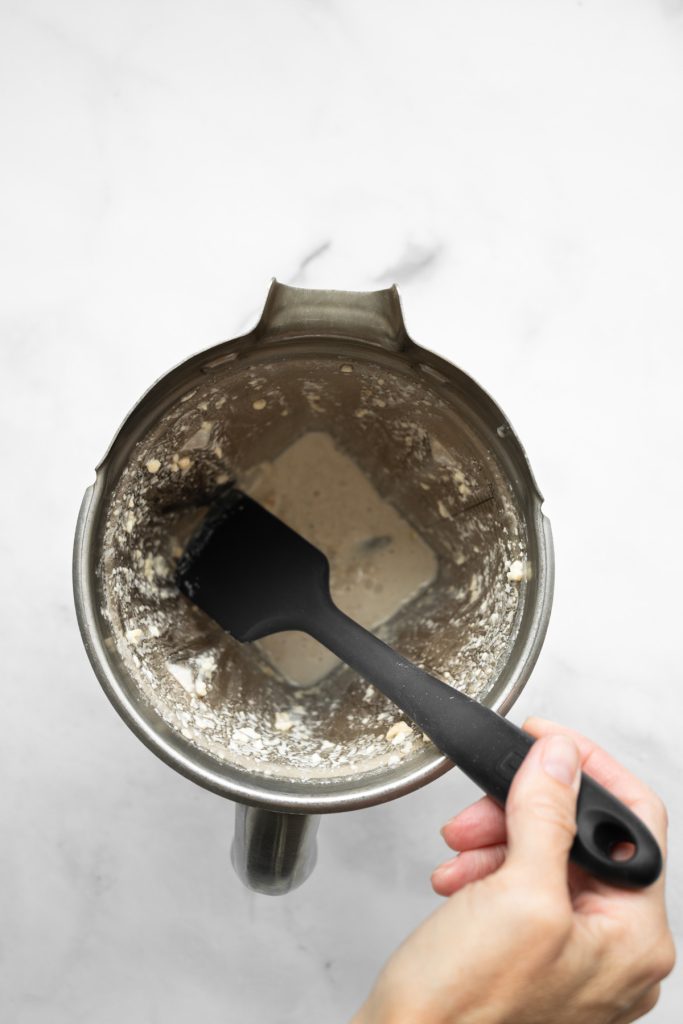
3. Stop the blender and add in the sea salt, nutritional yeast, olive oil and liquid coconut oil.
4. Blend on high until smooth and emulsified.


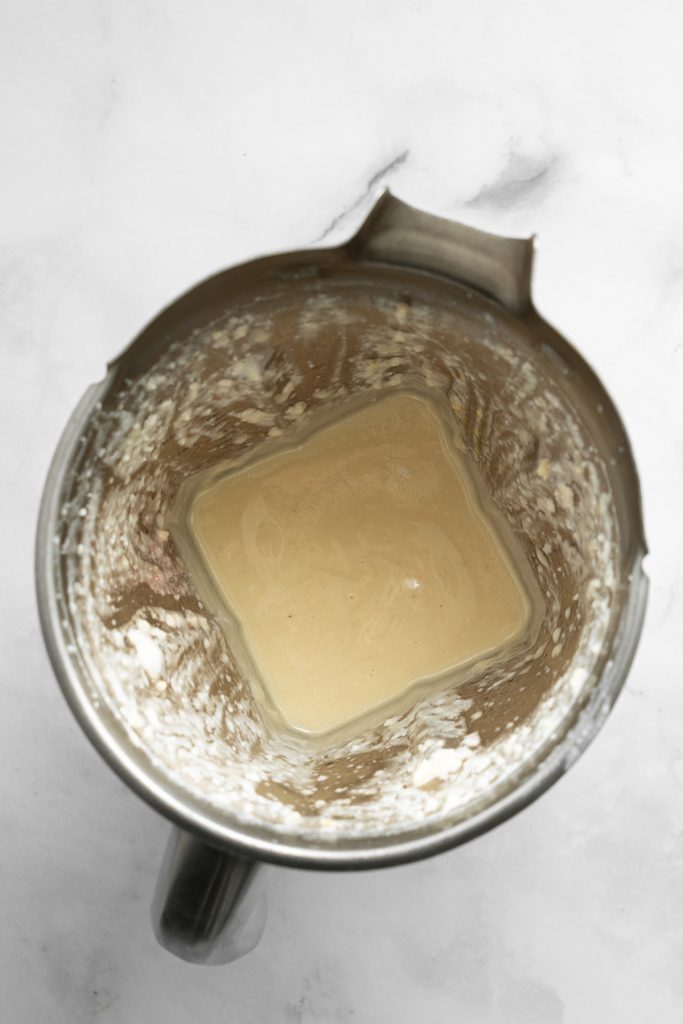
5. Pour the mixture in a freezer safe container with a fitted lid.
6. Cover and place in the freezer for 15 minutes to set. After the elapsed time, move it to the fridge for approximately 30-40 more minutes to finish setting up, or until firm throughout.

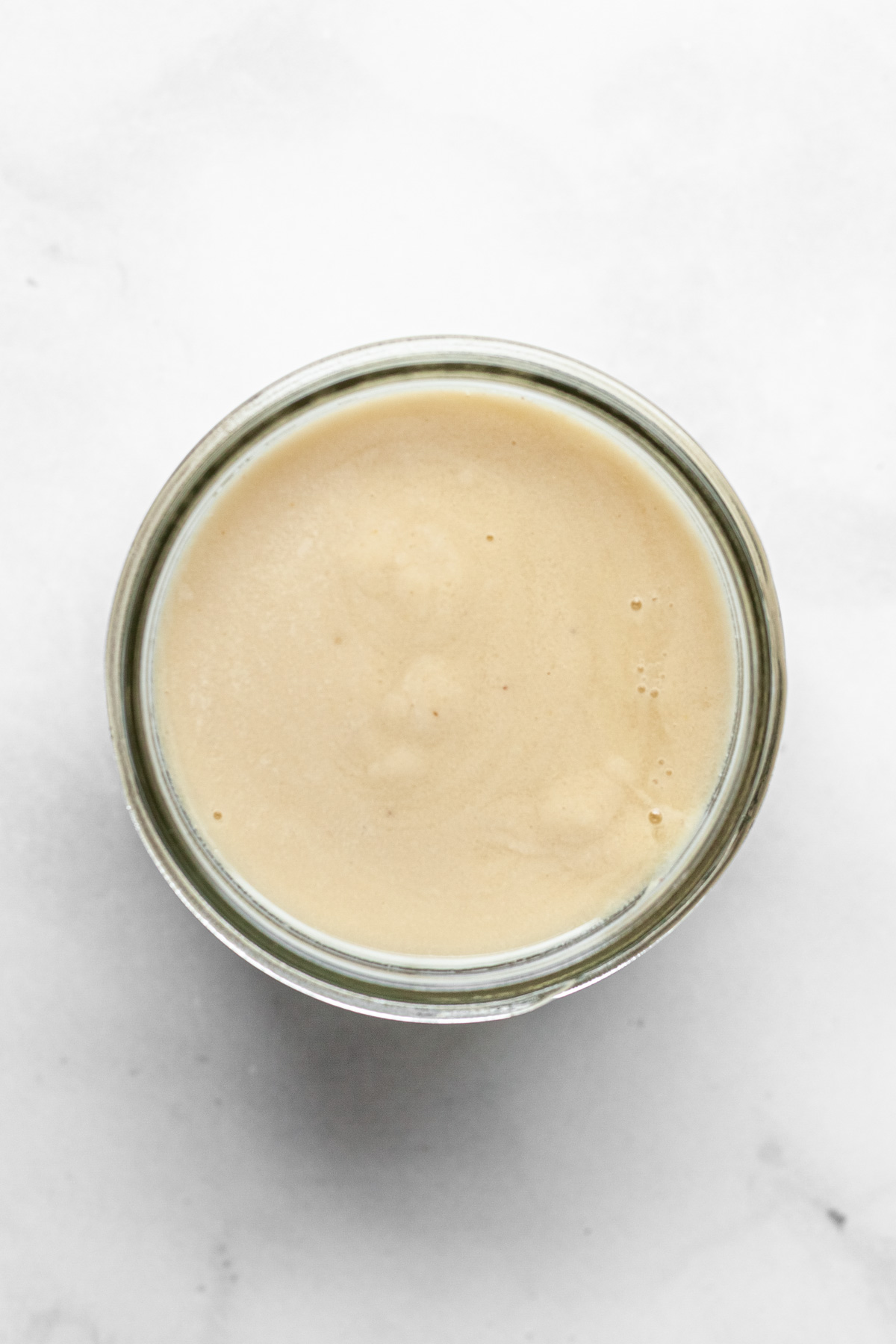
How to Use Homemade Vegan Butter
My vegan butter recipe is perfect spreading and melting applications. I like to enjoy this recipe on:
- steamed vegetables
- boiled corn on the cob
- cooked potatoes (boiled, mashed or roasted)
- scones, muffins
- toast
- bagels
- pancakes or waffles
How Not to Use Homemade Vegan Butter
- This vegan butter is not ideal for baking and high heat cooking. Store bought vegan butters contain lecithin (an emulsifier) which ultimately helps the butter to whip and hold a shape at room temp or withstand cooking and baking temperatures.
- I have used this recipe for pan sauteing so long as it's not at high heat, otherwise, the cashews and other solid components will burn.
- For alternative butter replacements, specifically for baking, you will find my 10 vegan butter replacements for baking tutorial helpful.
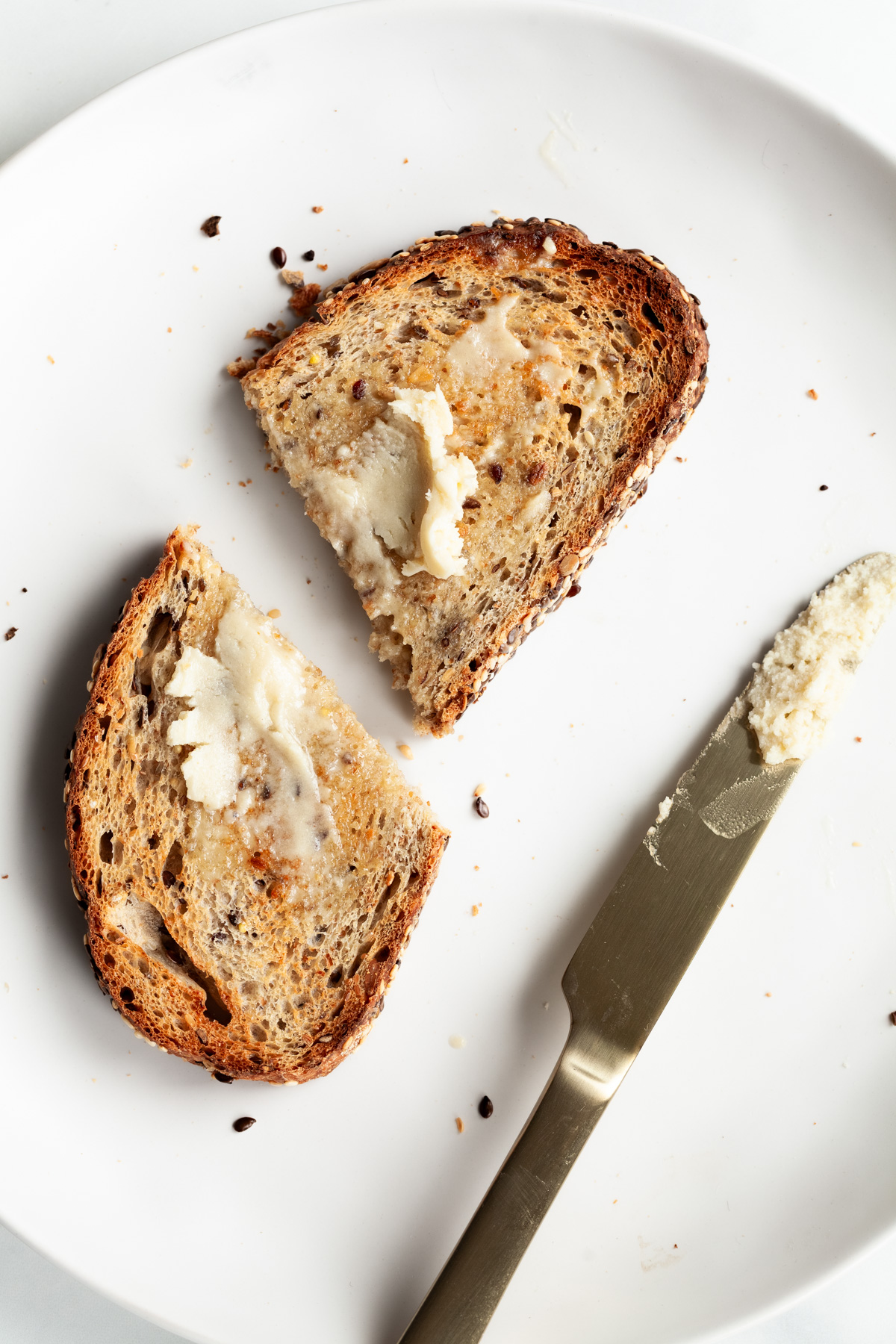
Storage Instructions
- This recipe should last about 5 days when kept covered in the fridge. This vegan butter must stay refrigerated; it is not stable nor safe to keep at room temperature.
- After prepping the butter mixture, pour it into feezer/fridge safe container with a fitted lid. My preference is to use a sterile 250ml mason jar with a lid.
- Alternatively, a silicone ice cube tray will work to create smaller portions. Once set, you can either transfer the portions to a container with a tight fitted lid or keep some portions covered in the freezer for up to 1 month. Defrost the portions in the fridge before using.
For information on safe food handling and storage, please visit: the Government of Canada Food Safety website, USDA Food Safety Inspection Agency website or your country's official food safety website.
Frequently Asked Questions
European butters are cultured/fermented to add richness and depth of flavour. They are also exceptionally creamy because of their additional milk fat content. Many people love European butters for the above noted reasons, and honestly, conventional store-bought vegan butter is just nowhere near as good. This is why I chose to mimic that same flavour and richness with this vegan butter recipe.
This vegan butter is better used for spreading over toast, scones, etc, or dolloping over roasted vegetables. I haven't tested it with any baking recipes. Because this recipe doesn't contain lecithin, the liquid portions will separate at high heat and may cause problems for baking recipes.
I have used it in cooking so long as it is not high heat cooking; the latter will cause the cashew component of this butter will burn.
Unfortunately, not. Again, this recipe is not fully stable at room temperature.


Spreadable Vegan Butter Recipe (The Original & Best)
Special Equipment
- High powered blender
Ingredients
- ½ cup (67g) raw cashews
- 5 tablespoon (58g) unsweetened almond milk, (cashew or soy milk will also work)
- ½ teaspoon apple cider vinegar
- ¼-½ teaspoon sea salt, (depending on your taste preference)
- 1 teaspoon nutritional yeast, (unfortified)
- 2 tablespoon extra virgin olive oil
- ½ cup (108g) refined coconut oil, melted
Instructions
- In a high powered blender, add the cashews, non-dairy milk and apple cider vinegar. Cover and blend on high until a fairly smooth consistency is achieved. You will need to turn off the blender, scrape down the sides and blend again to ensure all the cashew pieces have been incorporated as best as possible. Some smaller bits are OK at this stage.½ cup (67g) raw cashews, 5 tbsp (58g) unsweetened almond milk, ½ tsp apple cider vinegar
- Stop the blender and add in the sea salt, nutritional yeast, olive oil and melted coconut oil.¼-½ tsp sea salt, 1 tsp nutritional yeast, 2 Tbsp extra virgin olive oil, ½ cup (108g) refined coconut oil
- Cover and blend the mixture on high for approximately 20-30 seconds or until smooth and fully emulsified.
- Pour the mixture into a freezer safe container or mold. A 250ml glass mason jar with lid is my preferred storage container.
- Cover the container and place it in the freezer for 15 minutes to set. After the elapsed time, move it to the fridge for roughly 30-40 minutes more to fully set up. Use it cold from the fridge.
Heidi's Notes
- Storage: this recipe must be kept covered in the fridge; it will keep for about 5 days this way.
- Notes on molds: a silicone ice cube tray can be used to create small portions. Once set, you can transfer the portions to fridge safe container with a fitted lid or leave some portions covered in the freezer for up to 1 month. Defrost the frozen portions in the fridge before using.
- How to use this vegan butter recipe: it's perfect spreading and melting applications. I like to enjoy this recipe on: toast, steamed vegetables, corn on the cob, potatoes (boiled, mashed or roasted), scones, muffins, pancakes or waffles.
- How not to use it: this vegan butter recipe isn't good for baking and high heat cooking
Nutrition
This is an approximation of the nutrition offered in this recipe, and is created using a nutrition calculator. I am not a nutritionist and cannot guarantee accuracy. If your health depends on nutrition information, please calculate again with your preferred calculator.
Disclaimer
all recipes on The Simple Green are developed and tested in a Canadian kitchen, at normal elevation, using electric appliances and ingredients available in Canada. Results may vary.
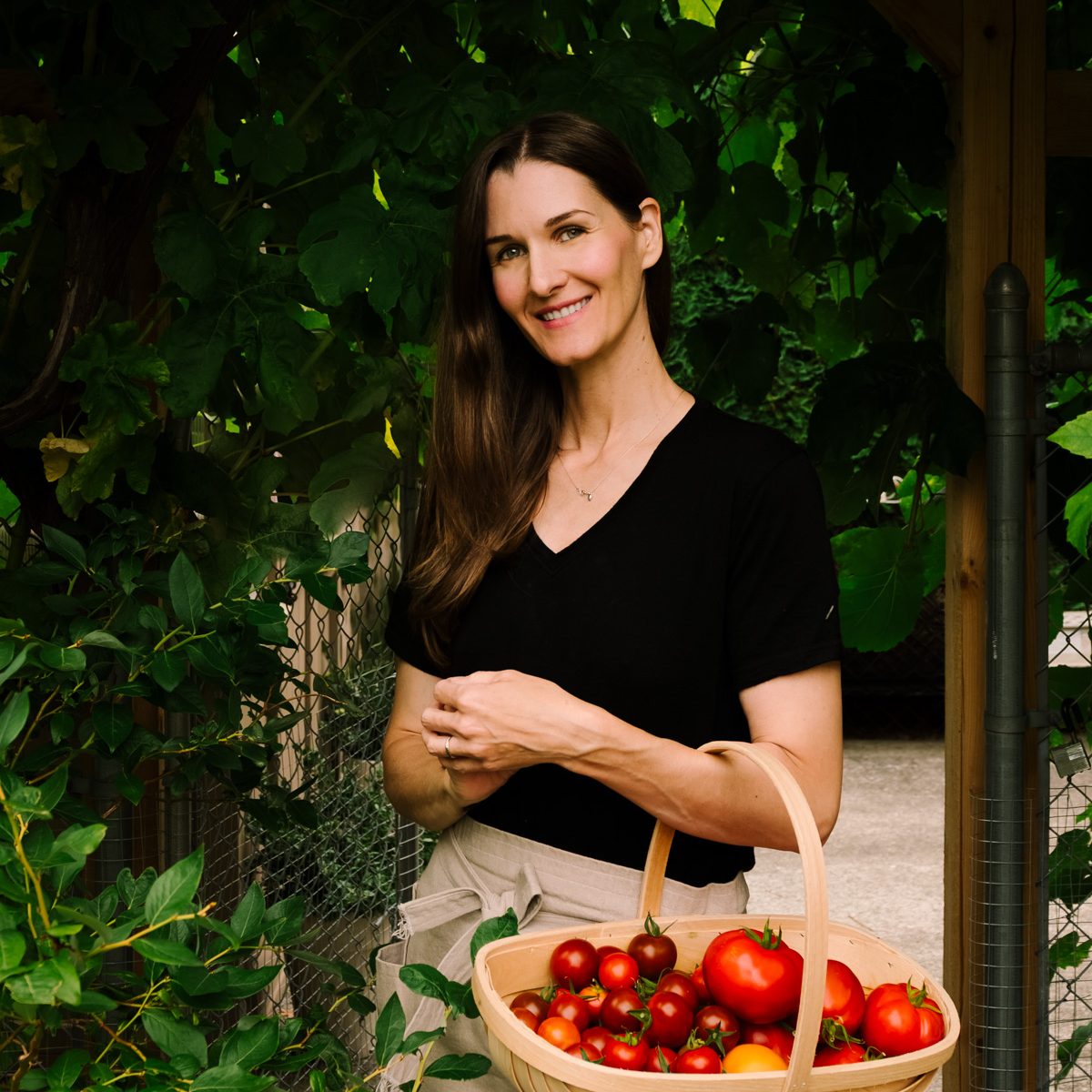
About Heidi Richter
Hi there! I'm Heidi, the professional recipe developer, food writer and photographer behind The Simple Green. Here you will find dozens of flavourful, approachable and well-tested recipes inspired by fresh seasonal ingredients you know and love.
I made this butter for the first tine a couple weeks ago and have been loving it ever since, especially on my toast. It’s so delicious; texture is so incredible and creamy, flavor is wonderful, and I love that it’s homemade. I have been looking for a recipe like this for a while, and I’m so happy I came across this one. Thank you so much for sharing this gem!
Thank you so much, Sydney! It makes my day to hear how much you like the recipe!
-Heidi 🙂
Can I add probiotic capsules to this recipe to make it a cultured butter?
Hi Alina! That is a great question and I haven't tried it myself to know whether it will work well. Let me know if you give it a try and how it works out 🙂
I haven’t tried making this yet but I was wondering if the butter tastes of coconut at all?
Hi Alison! I don't find this recipe tastes of coconut, however, I am using refined coconut oil which has almost no flavour. If you use unrefined coconut oil, it will taste of coconut.
Heidi, thank you so much for fulfilling one of my health goals--giving up butter. Before I discovered your recipe, I came across ones that required using a probiotic, so I wasn't sure if your recipe would do the trick, look, spread and taste like butter. But, your simple butter is fantastic! Thank you!
Ah thank you so much, Ann! Im happy you like the recipe. My family loves it too!
I actually made this Vegan butter recipe from the remnants of the cashew milk I made earlier. The recipe was a success and I absolutely love it!! It was easy to make and I hade all the ingredients on hand. Instead of sea salt, I used the Himalayan pink salt and it came out awesome! This will be a great addition ro my Plant-based lifestyle. Thank you for sharing this great recipe!
That's great to hear, Lauren. I'm glad you like it 🙂
I can’t wait to try this lovely recipe. Wondering if I can replace the coconut oil with olive oil as coconut oil raises cholesterol and I have a problem with high cholesterol. Thanks in advance. Andrea
Hi Andrea! That's a good question. Unfortunately, olive oil wont work to replace the coconut oil. You need an oil that will solidify like coconut oil does. There isn't really a substitution for this.
Just made this and am so excited to try it!! Does it work well in vegan baked deserts?
Hi Londyn! I haven't used it successfully in any vegan baking. However, it may also work as a replacement in simple recipes like cookies? It's hard to say because the liquid components may separate once they are heated in the oven. Let me know if you give it a try! I also accidentally deleted another one of your comments; would you mind sending it again? Thanks so much 🙂
Thank you for sharing this recipe! I enjoyed the simplicity in making this and the flavor was good. And I had all of the ingredients on hand which I enjoyed even more lol
That's wonderful to hear! Thank you for sharing your feedback, Mariana!