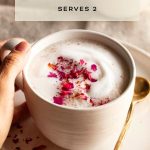
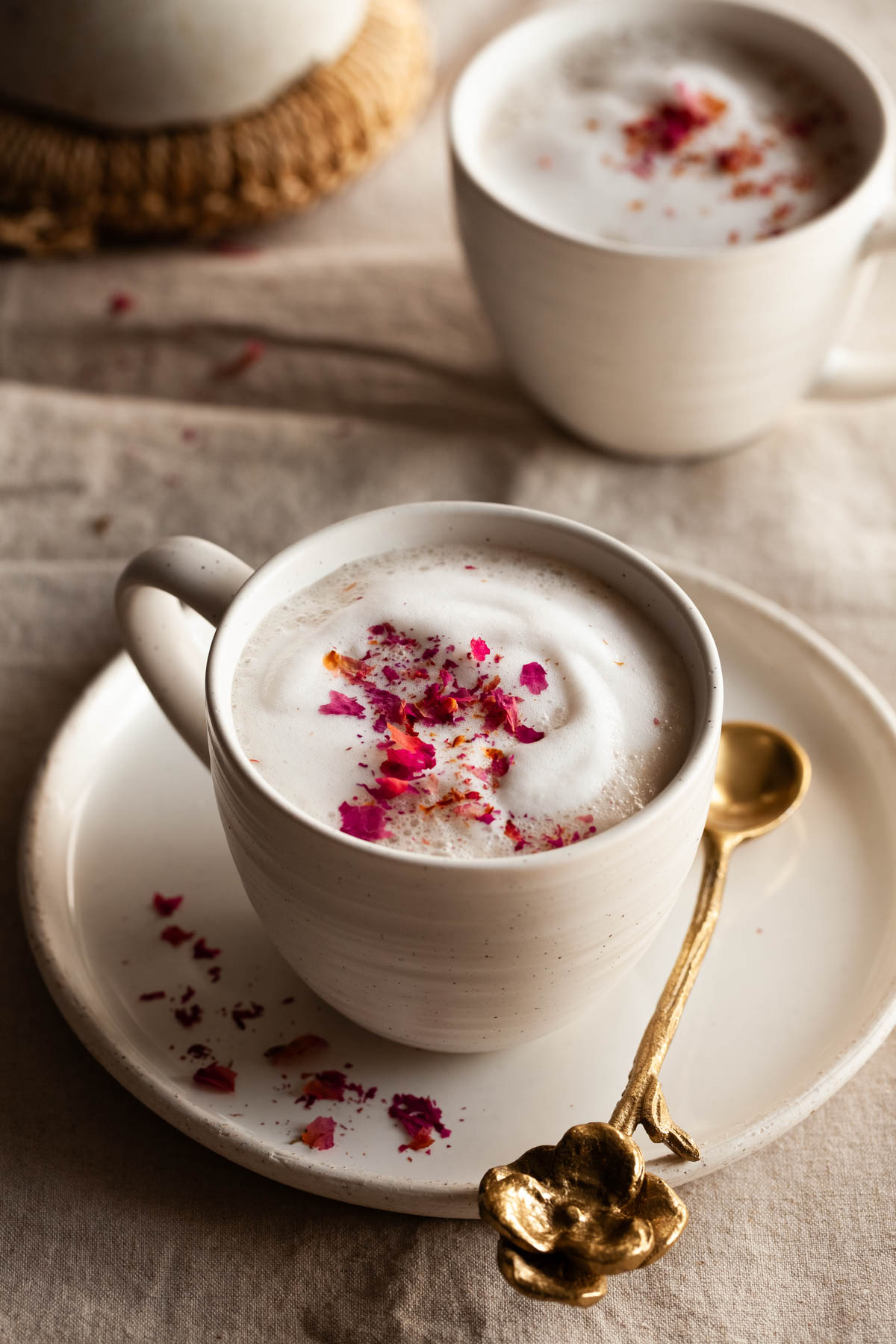
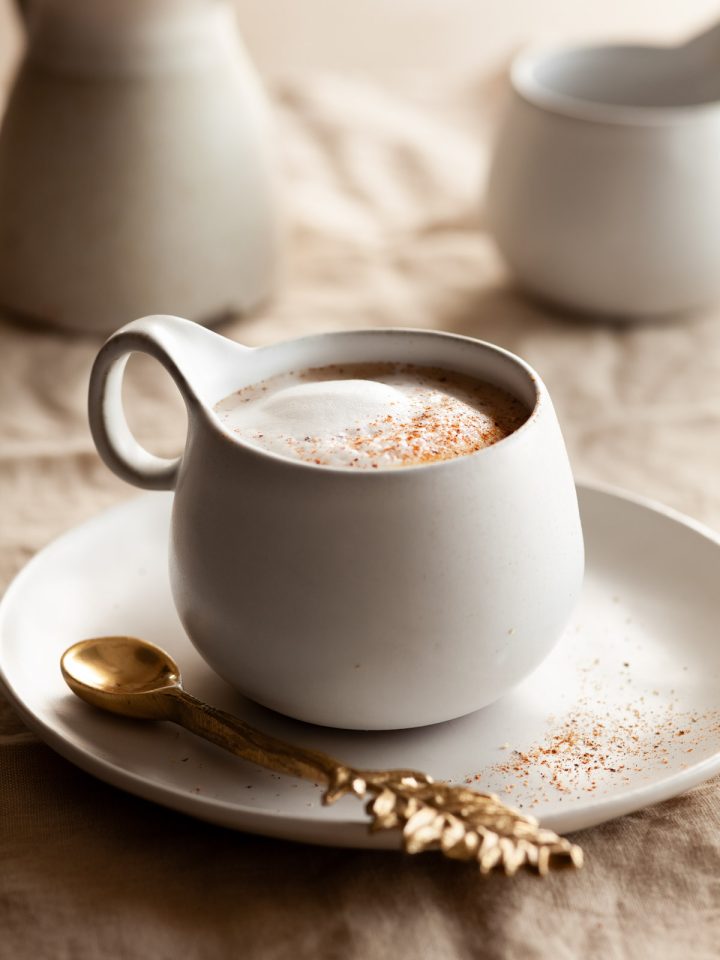
Warming, fragrant and floral, this dairy-free vanilla rose latte is a wonderful drink for fall and winter, or served over ice for a refreshing and aromatic summer drink. Made with food-grade rose water, vanilla extract, almond milk and naturally sweetened with maple syrup or honey.
Yields 2 servings
Prep Time 5 minutes | Cook Time 10 minutes | Total Time 15 minutes
This recipe was originally published in 2017 and has since been updated to include new images, more helpful tips and detailed instructions, along with adjustments to the ingredient list to make it even better.
Why This Recipe Works
A large bag of dried rose petals in my cupboard inspired me to create this vanilla rose latte recipe. Opening the bag, I was greeted with the aroma of blooming roses in the midst of a cold winter day. I knew then that rose would make for a lovely and unique latte ingredient.
Initially, I added the rose petals to a sachet and steeped them in hot milk which made a delicate and subtle floral flavour. However, rose petals contain natural oils which prevented the milk from frothing and separated from the milk by the time I finished my mug. Rose water, on the other hand, provided better flavour, deeper aroma and made the process much easier
Unsweetened almond milk is gently heated then mixed with vanilla, rose water, maple syrup and a pinch of salt. Why salt? It enhances all the flavours, but most importantly, it balances out the prominent sweet floral notes. A good barista almond milk makes this drink extra special; it creates a really gorgeous cloud of foam (and a perfect bed for a sprinkling of dried rose petals).
This is a delightful, bright and unique caffeine-free beverage; it's especially lovely during winter when I need reminding that spring is on the way.
Ingredient Notes & Substitutions
This dairy-free vanilla rose latte contains only a six ingredients. For the quantities of each, please see the recipe card further down the post.
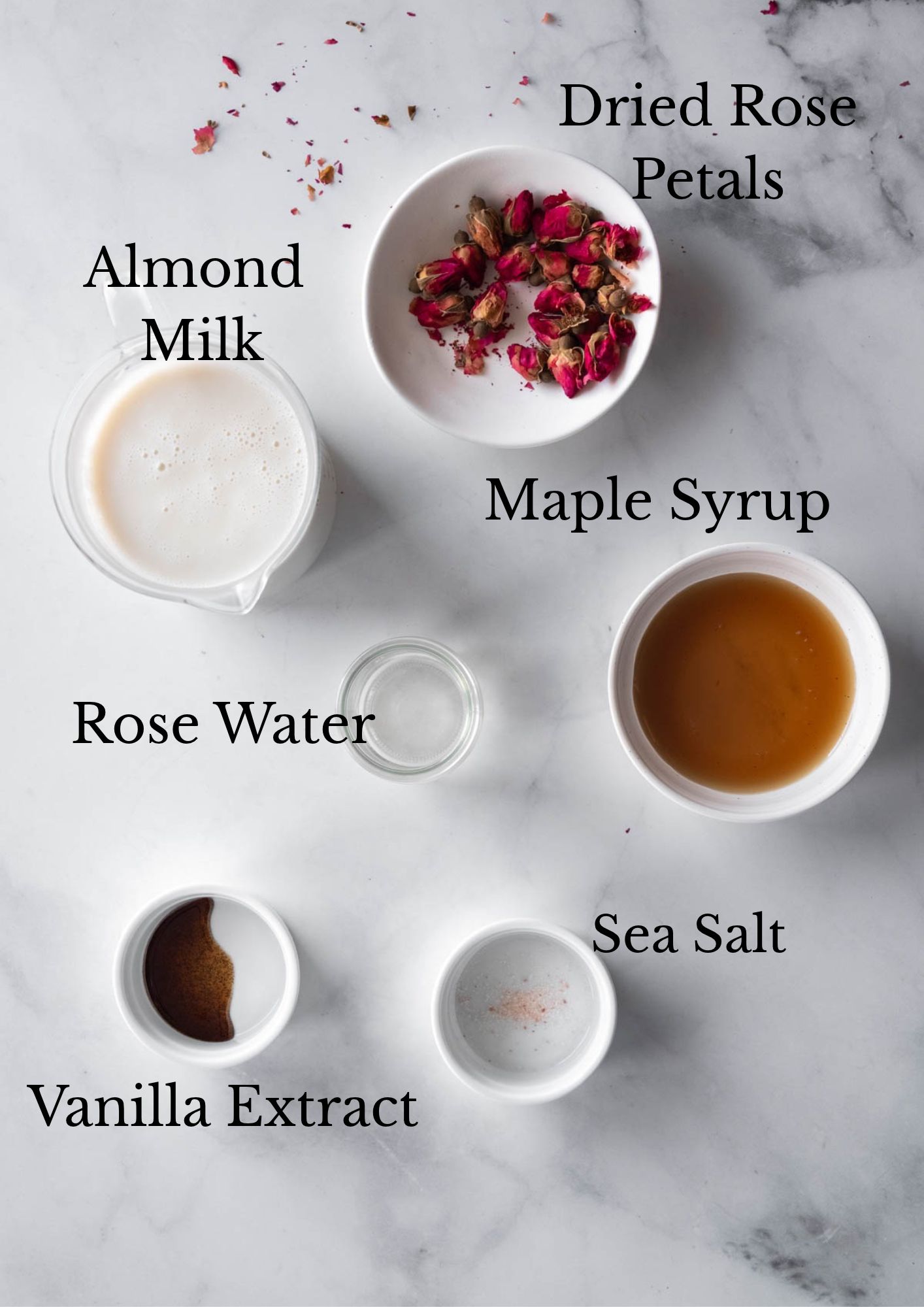
Unsweetened Almond Milk: or other plant-based milks will work here (cashew, oat, soy). However, avoid full fat coconut milk and hemp milk, which do not make such a pleasant latte in my experience. I use a dairy-free almond milk that is specifically made for foaming (a barista blend).
Rose Water (Organic Food-Grade): this is not always easy to source, however, if you have a Mediterranean or Middle Eastern specialty store in your area, you will likely find it there. It can also be found online from reputable shops.
Vanilla Extract: this enhances the aromatics in this drink. You can substitute with vanilla bean paste in equal measure.
Maple Syrup: or your sweetener of choice (honey, stevia or granulated sugar).
Sea Salt: this is essential for balancing out the prominent sweet floral notes. I suggest not skipping this, but feel free to do so if need be.
Dried Rose Petals (Organic Food-Grade): this is an optional ingredient meant for garnish. Source organic food-grade rose petals from a reputable online shop, health food store or tea shop. Many conventional rose petal products can be contaminated with pesticides and fungicides which you don't want to consume.
How to Make a Vanilla Rose Latte
For the full detailed instruction on making this recipe, please see the recipe card further down the post.
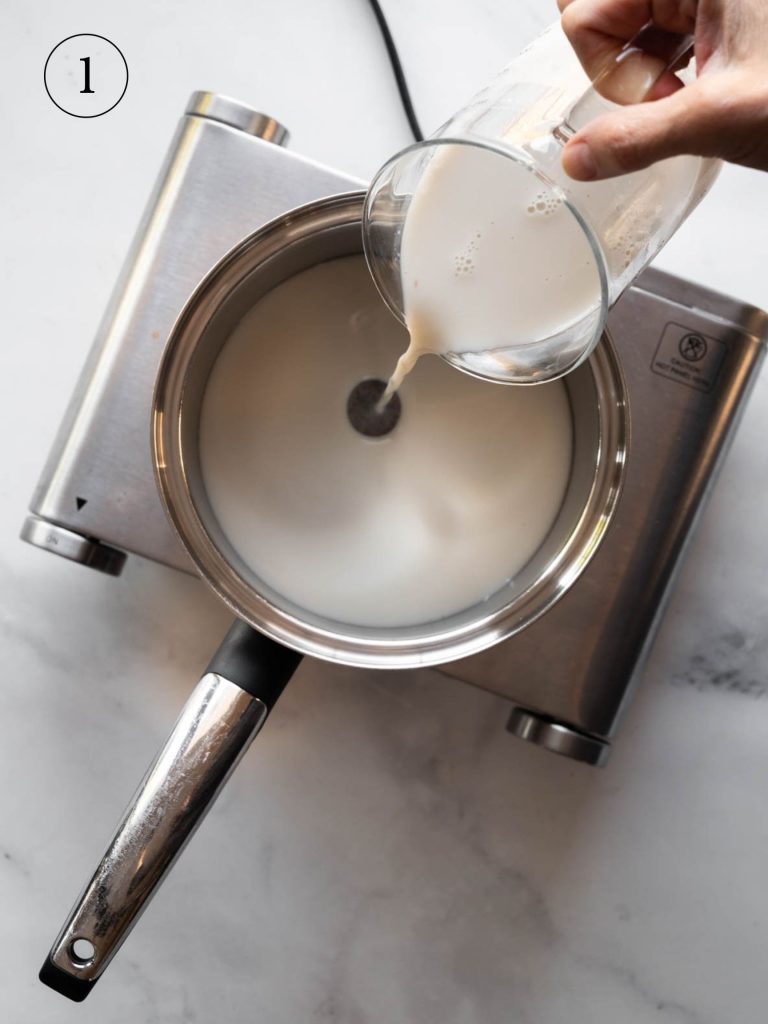
- Add the dairy-free milk to a small saucepan and gently heat over medium low.
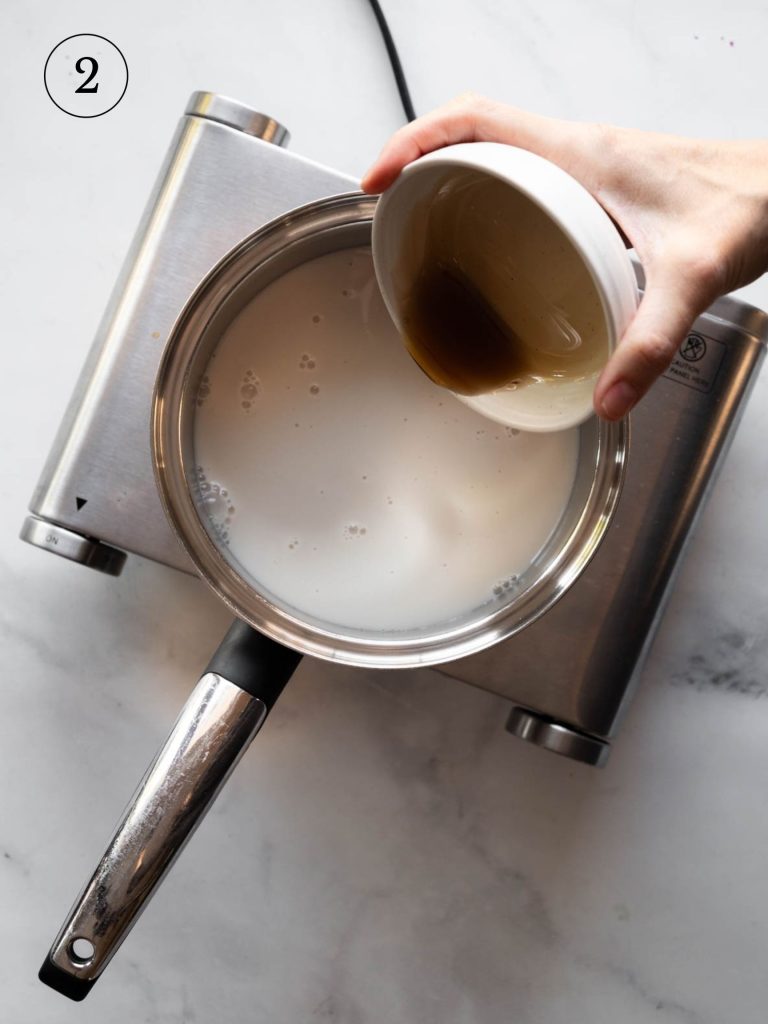
- Add the remaining ingredients, except for the dried rose petals.
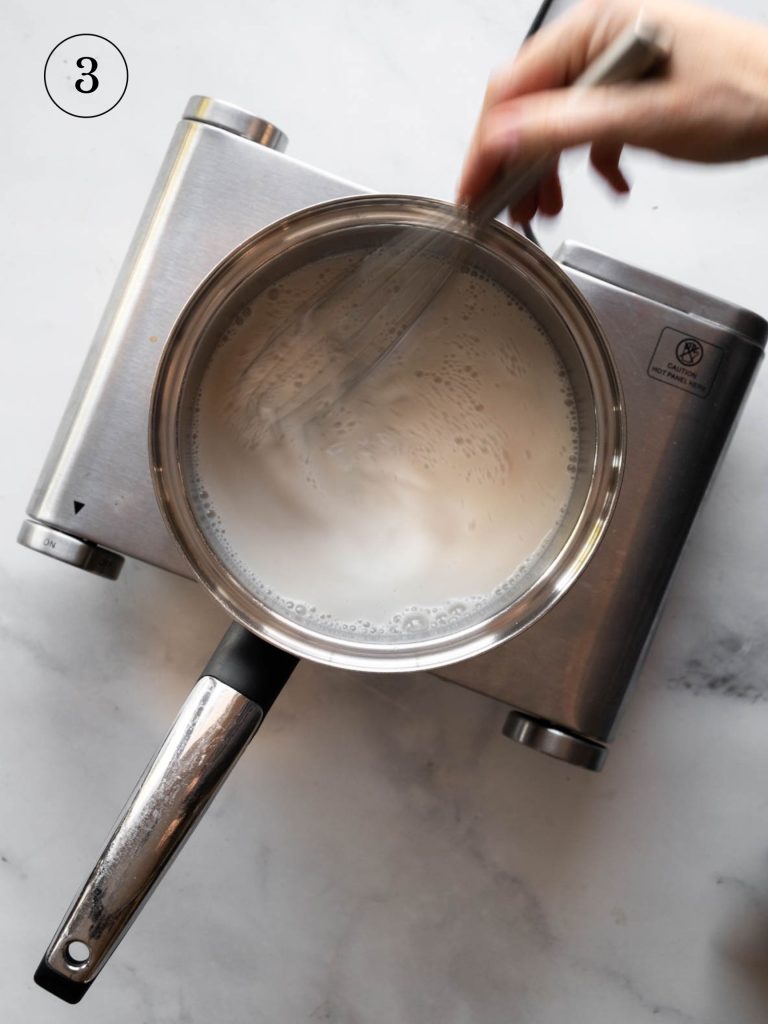
- Whisk until combined, heated throughout and foamy on top.
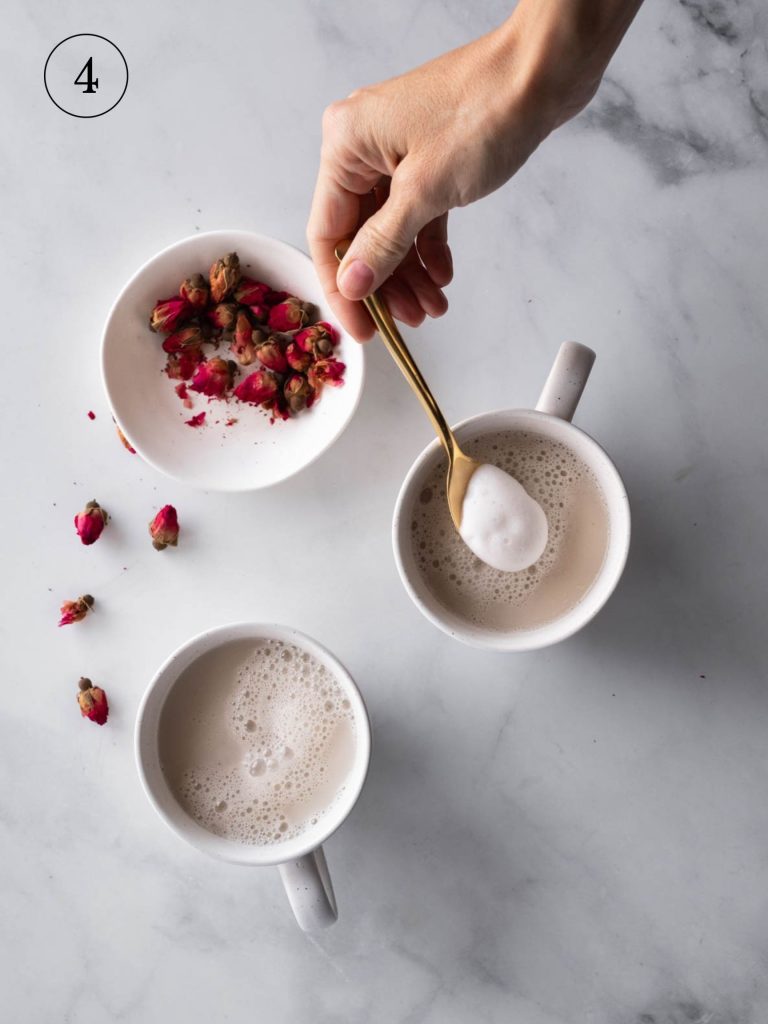
- Portion the mixture between two mugs and top with foam.
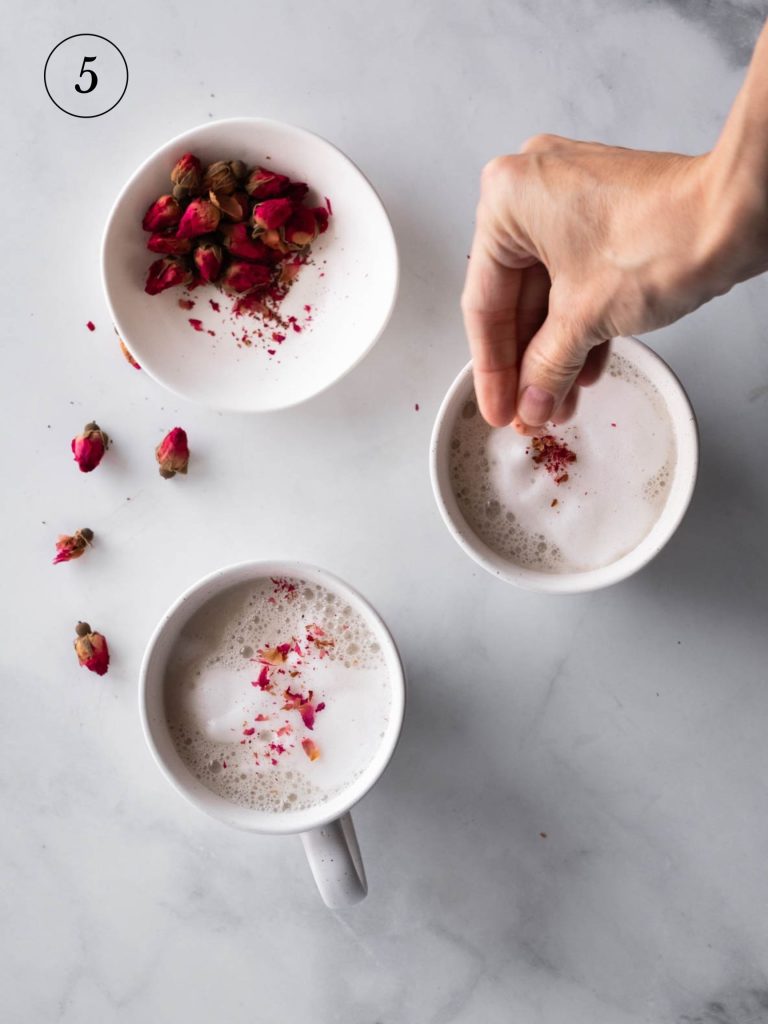
- Garnish with a sprinkle of rose petals and serve.
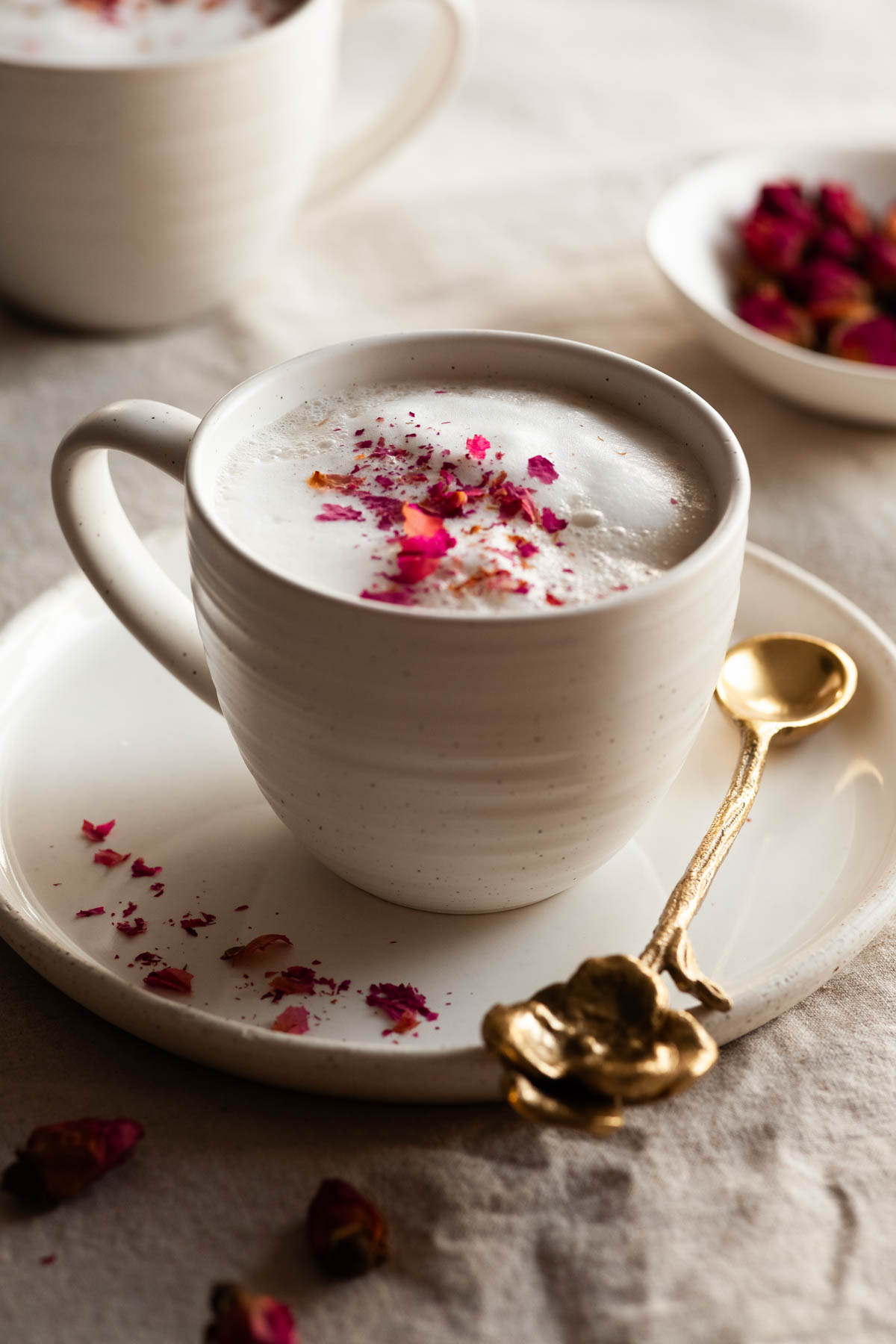
Tips for Foaming Dairy-Free Milk
- Whisk Vigorously: if you want foam on top, whisk the heated milk vigorously until it forms a thick frothy layer, then gently spoon this on top of the latte (it should float nicely).
- Use a Milk Frother: this will create a wonderful marshmallow-y foam top for your latte if combined with a dairy-free barista milk.
- Use a Barista Milk: Again, if you can find it, use a barista style milk (in Canada, Earth's Own make an oat or almond based one). These dairy-free milks are designed to foam exceptionally well.
Serving Options: Hot or Iced
This dairy-free rose latte make a comforting drink in the fall or winter. However, it can also be cooled and then poured over ice for a refreshing iced rose latte during the summer. My preference, however, is to serve it warm to enhance the aromatics of the rose and vanilla.
More Recipes
If you love my dairy-free vanilla rose latte recipe, you may also like:


Dairy-Free Vanilla Rose Latte
Ingredients
- 2 cups unsweetened almond milk
- 2 teaspoon organic food-grade rose water
- 2 tablespoon maple syrup, or sweetener of choice
- 1 teaspoon vanilla extract
- 1 pinch salt
For Garnish
- 1 tablespoon organic food-grade dried rose petals, crushed
Instructions
- Add the milk to a small saucepan and gently heat over medium low until just starting to steam.2 cups unsweetened almond milk
- Add the remaining ingredients, except for the dried rose petals, and whisk until combined, heated throughout and foamy on top.2 tsp organic food-grade rose water, 2 tbsp maple syrup, 1 tsp vanilla extract, 1 pinch salt
- Portion the mixture between two mugs and top with foam. Garnish with a sprinkle of rose petals and serve.1 tbsp organic food-grade dried rose petals
Heidi's Notes
- Whisk Vigorously: if you want foam on top, whisk the heated milk vigorously until it forms a thick frothy layer, then gently spoon this on top of the latte (it should float nicely).
- Use a Milk Frother: this will create a wonderful marshmallow-y foam top for your latte especially if combined with a dairy-free barista milk.
- Use a Barista Milk: If you can find one, use a barista milk (in Canada, Earth's Own makes an oat or almond based barista milk). These milks are made to foam exceptionally well.
Nutrition
This is an approximation of the nutrition offered in this recipe, and is created using a nutrition calculator. I am not a nutritionist and cannot guarantee accuracy. If your health depends on nutrition information, please calculate again with your preferred calculator.
Disclaimer
all recipes on The Simple Green are developed and tested in a Canadian kitchen, at normal elevation, using electric appliances and ingredients available in Canada. Results may vary.
About Heidi Richter
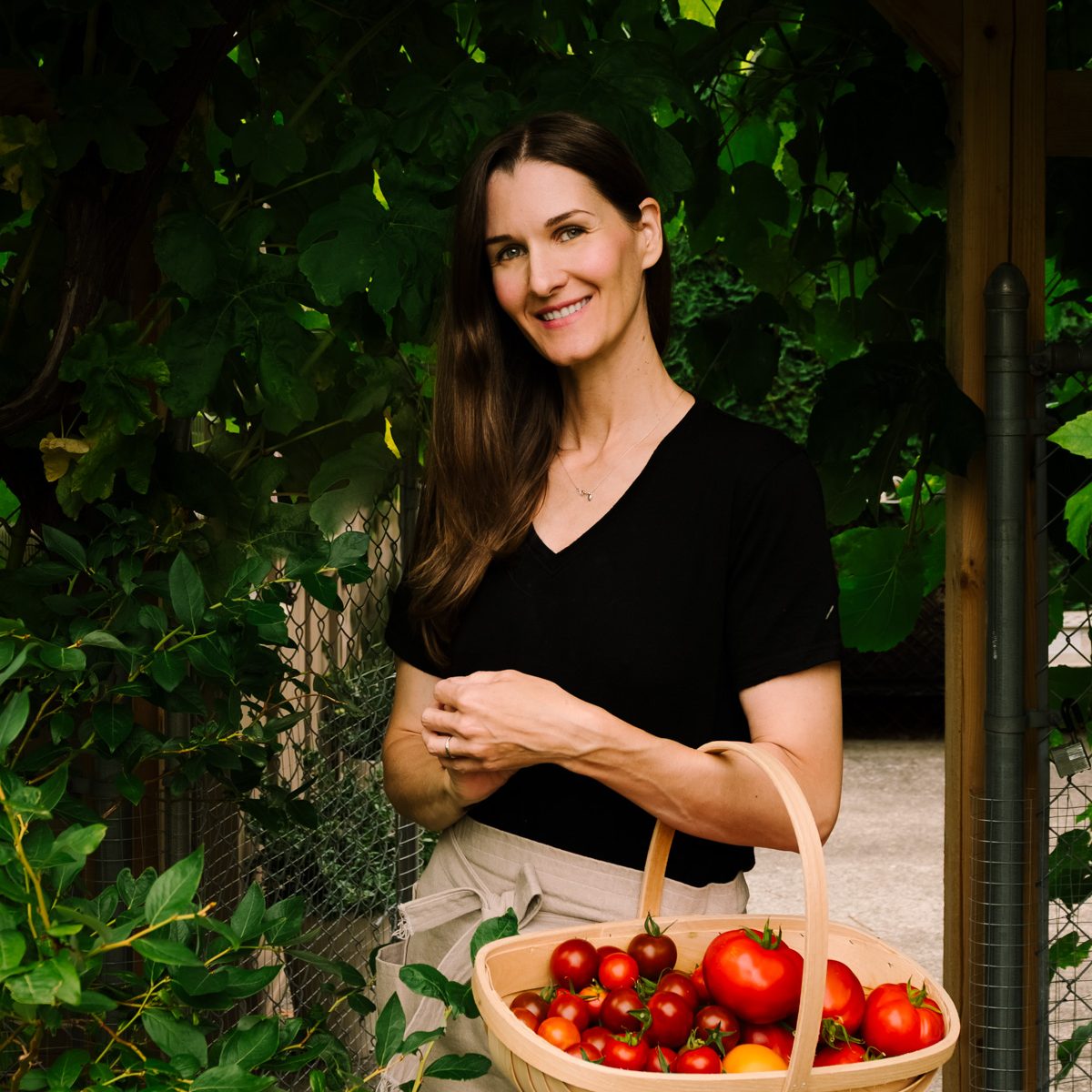
Hi there! I'm Heidi, the professional recipe developer, food writer and photographer behind The Simple Green. Here you will find dozens of flavourful, approachable and well-tested recipes inspired by fresh seasonal ingredients you know and love.